Ever wonder what’s really going on inside your split system air conditioner—and why everyone keeps saying you should clean it? Let’s break it down together, step by step, so you get cool air without the headaches (or the high bills).
How Does a Split System Air Conditioner Work?
Think of your AC as a tag team:
– Outdoor Unit: Has the compressor, condenser, and a fan. Its job? To dump all the heat from your house outside.
– Indoor Unit: Contains the evaporator coil, blower, and sensors. This is where your room air gets cooled down.
– Refrigerant Lines: These are like highways, carrying heat back and forth.
– Thermostat/Controller: It’s the brains—telling the system when to speed up, slow down, or stop altogether.
In a nutshell:
Warm air gets pulled in, cooled over chilly coils, and then blown back out. The system keeps repeating this cycle until your room feels just right. Regular maintenance by professionals such as AirCon-Men Cleaning Brisbane can help ensure your AC continues working efficiently year-round.
Why Bother Cleaning? Signs It’s Time for Maintenance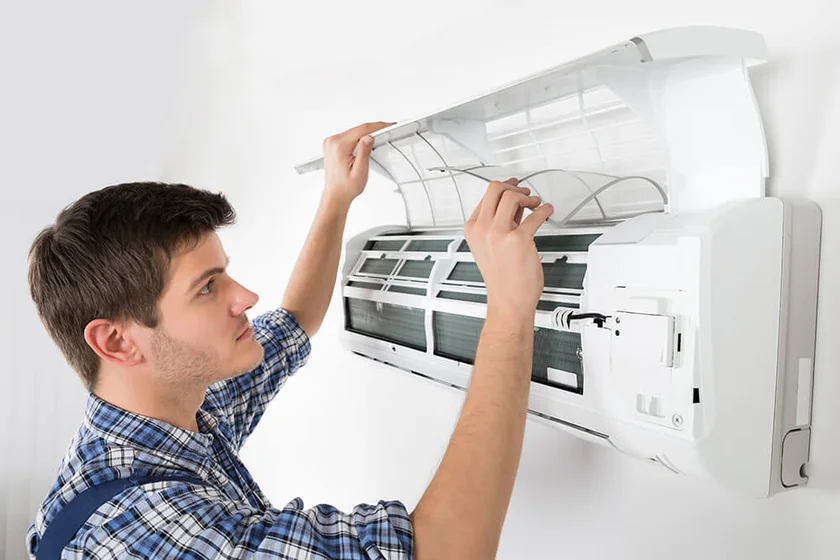
If you skip cleaning, your AC has to work way harder than it should. Here’s how you can tell it’s crying out for help:
– Weak airflow: Feels like it’s barely blowing? The filter or coils could be clogged.
– Odd smells: Musty or funky odors often mean mold or mildew is having a party inside.
– Sky-high energy bills: A dirty system uses more electricity to do the same job.
– Uneven cooling: Some rooms are freezing, others are toasty.
– Frost or leaks: Ice on pipes or puddles around the unit are red flags.
Pro tip:
Don’t just assume it’s “just dirt.” Sometimes, electrical or refrigerant issues can look like regular grime—so if cleaning doesn’t help, call a pro for a check-up.
Step-by-Step: How to Clean Your Split System (Indoor Unit)
Ready to get your hands a little dirty? Here’s how you can clean the basics:
- Power Down
– Turn off the AC at the breaker. Safety first!
- Open the Indoor Unit
– Pop off the cover or service panel.
- Filter Time
– Remove the air filter.
– If it’s reusable: Vacuum or gently rinse it with water—don’t scrub too hard!
– Let it dry before putting it back.
- Clean the Coil
– Spray a foaming coil cleaner (read the label for instructions!).
– Let it sit, then carefully rinse with low-pressure water.
- Clear the Drain
– Wipe out the drain pan.
– Pour a mild detergent solution down the drain line.
– Flush with water to make sure it’s clear—no standing water allowed!
- Reassemble & Test
– Put everything back together.
– Turn the power back on and run the AC for a few minutes.
– Make sure it’s blowing strong and cool.
Where Does Gunk Build Up? (And Why It’s Bad)
– Dust: Collects on coils and fans, making the system strain to cool.
– Mold: Loves damp spots—think drain pans and filters. It’s bad for your lungs and the AC’s health.
– Algae: Grows in the drain lines, leading to clogs and leaks.
What happens if you ignore it?
Higher bills, less cooling, weird smells, and eventually—expensive repairs.
Maintenance Schedule: Keep It Simple
Want your split system to last? Here’s an easy schedule:
– Every Month:
– Quick listen for odd noises.
– Check all visible parts for dust or leaks.
– Every 3 Months:
– Clean or replace filters.
– Wipe down coils and fans.
– Make sure air can flow freely.
– Once a Year:
– Professional inspection (refrigerant, wiring, thermostat).
– Deep clean—especially before summer!
Extra tips:
– Keep outdoor units clear of leaves and debris.
– Always follow your manufacturer’s instructions.
– Document what you do—future-you will thank you.
Final Thoughts
Cleaning your split system AC isn’t just about saving money (though it definitely helps!). It’s about breathing cleaner air, staying comfortable, and avoiding breakdowns right when you need cool air the most.
Stick to a simple routine, don’t panic if you run into a smelly or noisy unit, and when in doubt—call in a pro.
Stay cool!