Salt in the air. UV that cooks cheap coatings. Sudden downpours that find every tiny pore you forgot about.
If you’re finishing concrete on the Gold Coast, you’re not choosing “a look.” You’re choosing how that slab will behave for the next 5, 15 years.
Hot take: glossy, high-maintenance finishes near the beach are a trap.
They photograph well on install day. Then the seal wears, salt haze shows up, and you’re stuck in a reseal cycle that feels a bit like repainting a boat.
For longer-lasting results, consider decorative concrete finishes Gold Coast that prioritise quality over quick fixes. Go textured where it counts. Go lower-porosity where exposure is brutal. Spend money on prep, not just pattern.
One line I live by: Your finish is only as good as your substrate and your sealer.
Why decorative concrete fits coastal living (when you spec it properly)
Here’s the thing: decorative concrete isn’t “delicate” by default. Done right, it’s one of the most climate-tolerant surfaces you can put outdoors because you’re still working with concrete’s compressive strength, then tailoring the top few millimetres for performance.
On the Gold Coast you’re designing around four realities:
– UV: fades dyes, chalks weak sealers, heats dark colours
– Moisture + humidity: pushes vapour through slabs and lifts coatings if you trap it
– Salt: accelerates surface wear and makes residue look dirty even when it’s clean
– Slip risk: pool zones and summer storms punish smooth finishes
Technically speaking, you want low absorption, a stable binder system, and a sealer that matches exposure (penetrating vs film-forming is a real decision, not a vibe).
A quick data point: exterior UV is no joke in Queensland. Australia has some of the highest UV levels globally; the Australian Radiation Protection and Nuclear Safety Agency (ARPANSA) regularly reports “Extreme” UV Index values (11+) in many locations during warmer months. Source: ARPANSA UV Index information and monitoring pages (arpansa.gov.au).
Translation: pick products that don’t get brittle or yellow when cooked.
The decision triad: budget, style, and where the slab lives
Now, this won’t apply to everyone, but most “finish regret” comes from choosing a texture for aesthetics and forgetting how the area is used.
Driveways behave differently to alfresco slabs. Pool surrounds are their own category (chemicals, bare feet, sunscreen grime… the works). Indoors, you can get away with smoother, denser finishes because you’re not fighting rainfall and salt deposition every week.
Ask yourself three blunt questions:
- Is it getting wet regularly? (pool splash, storms, irrigation overspray)
- Is it in full sun? (midday glare and heat matter more than people think)
- How often will you honestly clean and reseal it? Be real.
I’ve seen owners pay for a premium decorative system, then treat maintenance like an optional subscription. Outdoors on the coast, it isn’t.
What finishes suit Gold Coast homes (and what I’d choose)
Exposed aggregate (the coastal workhorse)
If you want something that looks “Gold Coast” without trying too hard, exposed aggregate is hard to beat. It has natural slip resistance, hides dust and salt residue better than flat colour, and ages in a forgiving way.
Pros
– Excellent grip underfoot (great near pools when specified correctly)
– UV-stable because the colour is largely in the stone, not a topical dye
– Doesn’t scream for attention, but still looks intentional
Cons
– Can be rough on bare feet if the exposure is aggressive
– Requires good placement and finishing skills; you can’t polish a bad pour into greatness
Typical cost (very broad): mid-range; the mix and exposure level drive price more than people expect.
Stamped concrete (high style, higher responsibility)
Stamped finishes can look brilliant for courtyards and feature zones. The problem isn’t stamping. The problem is sealing.
Film-forming sealers take the beating outdoors, and in salt air they can wear unevenly, then you get patchy sheen and that “tired” look.
Pros
– Big visual impact; can mimic pavers or timber patterns convincingly
– Faster install than laying individual pavers (often)
Cons
– Reseal schedule matters, especially in full sun
– Can be slippery if you pick the wrong sealer or skip anti-slip additives (yes, even if the stamp is textured)
My opinion: stamped is best when it’s not the whole property. Use it like an accent wall, not the entire house.
Coloured or stained concrete (clean, modern, but unforgiving)
A soft sand tone or pale grey can look perfect with coastal architecture. But flat colour shows sins: footprints, leaf tannins, tyre marks, uneven curing, you name it.
Look, you can still do it. Just accept that it’s a “clean lines” choice, and clean lines mean maintenance.
Pros
– Beautiful with minimalist builds and light exterior palettes
– Can reduce glare compared to bright white pavers (depending on tone)
Cons
– Colour consistency depends on batching, curing conditions, and applicator discipline
– Dark colours get hot and can show UV fade faster
Honed / polished concrete (great indoors, selective outdoors)
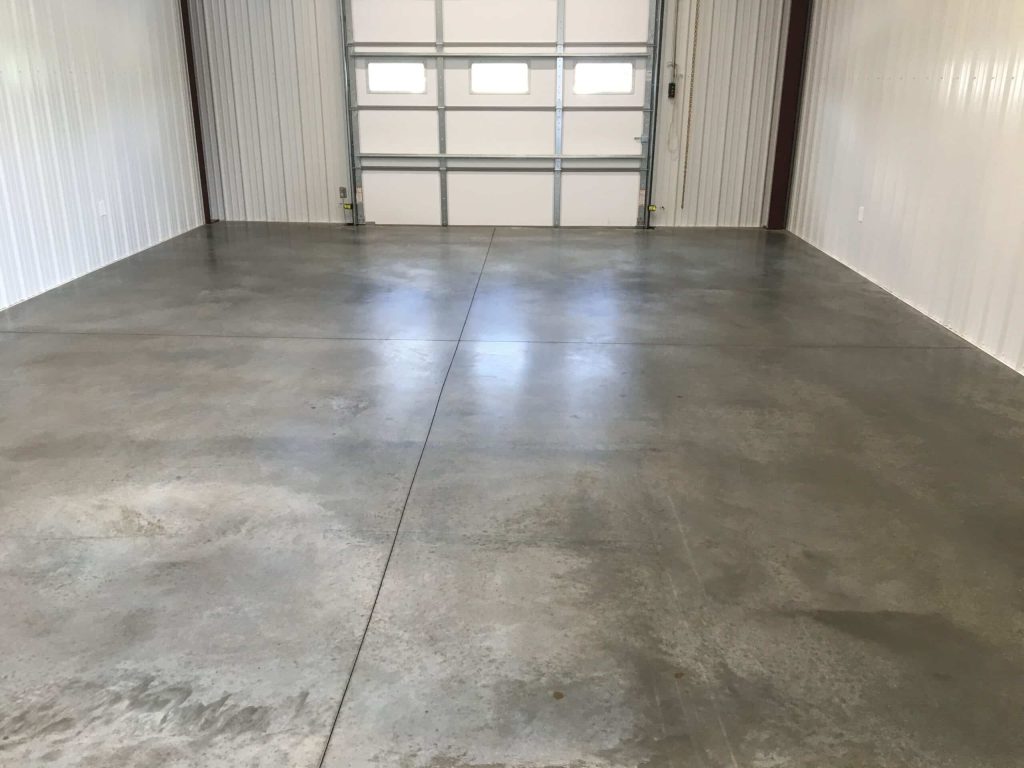
Indoors, polished concrete is a dream: dense, sleek, easy to mop, long lifecycle. Outdoors on the Gold Coast? It’s situational.
If it’s under full weather exposure, smooth honed finishes can become slip risks and sealer wear becomes obvious. Under a well-covered alfresco with decent drainage, it can work beautifully.
Pros
– Premium feel; reflects light nicely indoors
– Dense surface, good stain resistance with the right guard
Cons
– Can be slippery when wet if over-smoothed
– Requires careful product selection to avoid trapping moisture in coastal slabs
Microtoppings and overlays (the renovation hero, when done by pros)
Overlays are tempting because they can transform old concrete without ripping it out. They’re also where corner-cutting gets punished.
Bonding is everything. Moisture testing is non-negotiable. If your slab has vapour drive and you install the wrong system, blisters and delamination aren’t “bad luck,” they’re physics.
Pros
– Ideal for updating tired patios and pool surrounds
– Huge design flexibility: texture, colour, patterns
Cons
– Substrate movement cracks can telegraph through
– Skilled installation required; DIY kits rarely survive coastal conditions
A slightly messy but useful “what should I pick?” guide
If you want a simple match-up, this is the shortlist I give friends:
– Pool surround: exposed aggregate or textured overlay with a tested slip rating
– Driveway: exposed aggregate, broom finish with a quality sealer, or stamped (only if you’ll reseal)
– Alfresco (covered): honed finish, coloured concrete, or a refined overlay
– Beachfront full exposure: prioritise penetrating sealers and finishes that hide wear (aggregate beats glossy colour every day)
One caveat: slip ratings and standards vary by product and installer method, so don’t accept “it’s textured” as proof. Ask for the spec.
Application essentials (this is where longevity is won)
A lot of articles make installation sound like a recipe. It’s not. It’s risk management with a trowel.
The checks I don’t skip
– Moisture testing: because vapour pressure will wreck coatings
– Surface profile: mechanical grinding/shot blasting as required, not “a quick acid wash and hope”
– pH and contamination: salts, curing compounds, oils, sunscreen build-up near pools (seriously)
Then you sequence it properly: primer compatible with the system, controlled mix ratios, consistent application thickness, and cure windows respected even when the weather is “almost fine.”
Gold Coast humidity can stretch cure times. Fast-tracking just makes failures arrive earlier.
(And yes, I’ve seen beautiful finishes ruined because someone sealed too soon and trapped moisture. The blush, the whitening, the peeling, classic.)
Care and longevity: keeping it coastal-ready
Salt film makes surfaces look dull and dirty faster than inland homes. The fix is boring, but it works.
– Use pH-neutral cleaners (high-alkaline products can haze sealers and degrade some resins)
– Rinse well; residue attracts grime
– Keep drainage working so water doesn’t pond and push minerals to the surface
– Reseal based on wear, not a calendar reminder (high-traffic paths fail first)
Watch for early warning signs: patchy sheen, micro-cracking, cloudy spots after rain, or fine white deposits (efflorescence). Deal with them early and you usually avoid the expensive “strip and start again” conversation.
One more opinionated note: “maintenance-free” is marketing. Low-maintenance is real. Aim for that.
The finish that “ages gracefully” is usually the one that hides life
Coastal homes get lived in. Kids, sand, pool chemicals, entertaining, wet feet, moving furniture. The most satisfying decorative concrete finishes on the Gold Coast aren’t the most precious, they’re the ones that still look good when real life happens.
Texture that complements architecture. Colour that won’t fight UV. Sealers chosen for exposure, not brochure shine.
That’s the difference between a surface that survives and one that keeps looking like it belongs there.