Day: August 21, 2024

Exceptional Barber Chairs for the Modern Stylist – Style, Comfort, and Durability

In the fast-paced world of modern hairstyling, a barber chair is not just a seat; it is a pivotal element of both functionality and aesthetics in a salon. Exceptional barber chairs for the modern stylist blend style, comfort, and durability, catering to both the needs of the stylist and the comfort of the client. In today’s competitive market, these chairs are not merely about seating but are integral to the overall salon experience. Style is one of the most significant factors when choosing a barber chair. Modern barber chairs come in a variety of designs, from sleek and minimalist to luxurious and retro. The contemporary trend leans towards clean lines and bold colors, allowing salons to make a stylish statement. High-quality materials like genuine leather or durable synthetic alternatives are often used to ensure that the chair looks sophisticated while withstanding the rigors of daily use. The design also often incorporates adjustable features that seamlessly blend with the chair’s overall aesthetic, offering versatility without compromising on style.
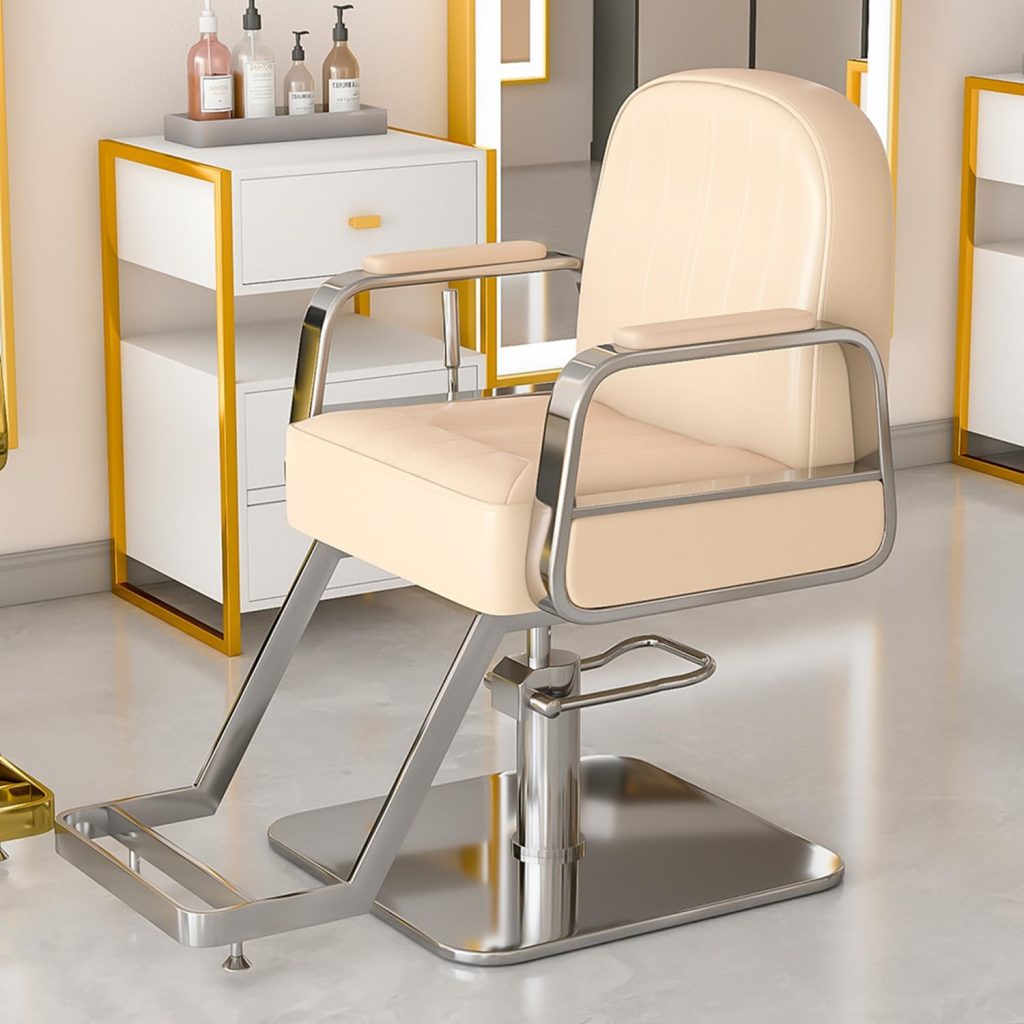
Salon Chair
Comfort is paramount in a Barber Chair, as it directly impacts the client’s experience. High-end barber chairs are designed with ergonomics in mind, featuring plush cushioning and adjustable components that provide optimal support and relaxation. The seat and backrest are usually crafted from high-density foam, which retains its shape and offers long-lasting comfort. Some chairs even include memory foam options or gel cushioning to enhance the sitting experience. Additionally, the ability to adjust the height, recline angle, and leg rest ensures that clients can find their ideal position, enhancing their overall satisfaction and comfort during their salon visit. Durability is another critical aspect of an exceptional barber chair. Given the daily wear and tear that these chairs endure, it is essential that they are built to last. Robust construction materials, such as heavy-duty metal frames and high-quality upholstery, are key to ensuring longevity.

The base of the chair is typically made from solid metal, often with a hydraulic lift mechanism that allows smooth and precise height adjustments. This construction not only provides stability but also helps the chair withstand constant use without compromising its structural integrity. Additionally, features like stain-resistant and easy-to-clean surfaces help maintain the chair’s appearance over time, making it a practical choice for busy salons. In conclusion, exceptional barber chairs for the modern stylist are a harmonious blend of style, comfort, and durability. They are designed to enhance the salon experience, combining aesthetic appeal with functional features that cater to both the stylist’s and client’s needs. As salons continue to evolve and compete, investing in high-quality barber chairs becomes a strategic decision that contributes significantly to the overall ambiance and efficiency of the business. By prioritizing these three key elements, salon owners can ensure that their barber chairs not only meet but exceed the expectations of today’s discerning clients and professionals.

The Future of Psychiatric Care – Emerging Trends in Mental Health Treatment

The landscape of psychiatric care is rapidly evolving, influenced by advances in technology, a growing understanding of mental health disorders, and a shift towards more holistic and personalized treatment approaches. One of the most significant emerging trends in mental health treatment is the integration of digital health tools. Telepsychiatry, which involves providing psychiatric care through video conferencing and other online platforms, has gained prominence, particularly since the COVID-19 pandemic. This mode of care not only increases access to mental health services for individuals in remote or underserved areas but also offers greater flexibility for patients and providers. Additionally, mobile apps and digital platforms are being used to deliver cognitive-behavioral therapy CBT, mindfulness training, and other therapeutic interventions, making mental health support more accessible and immediate. Another trend reshaping psychiatric care is the growing emphasis on personalized medicine. With the advent of genomics and the increasing availability of genetic testing, there is a burgeoning interest in tailoring psychiatric treatments to an individual’s unique genetic makeup. Pharmacogenomics, the study of how genes affect a person’s response to drugs, is becoming particularly relevant in psychiatry.

mental health and wellness This approach allows for more precise medication management, reducing the trial-and-error process often associated with finding the right psychiatric care in arizona medication. By understanding a patient’s genetic profile, clinicians can predict which medications are likely to be most effective with the fewest side effects, thereby enhancing the overall treatment experience and outcomes. The rise of artificial intelligence AI and machine learning is also revolutionizing psychiatric care. AI algorithms can analyze vast amounts of data from electronic health records, genetic information, and even social media activity to identify patterns that might indicate a risk of mental health issues or predict a patient’s response to different treatments. This data-driven approach can help in early diagnosis, personalized treatment planning, and continuous monitoring of a patient’s progress. Furthermore, AI-powered catboats and virtual therapists are being developed to provide immediate mental health support and guidance, which can be especially beneficial in areas with a shortage of mental health professionals.
In addition to technological advancements, there is a growing recognition of the importance of addressing the social determinants of mental health. Factors such as socioeconomic status, education, environment, and community support play a crucial role in an individual’s mental well-being. As a result, there is a shift towards more comprehensive care models that integrate mental health services with primary care, social services, and community support. This holistic approach aims to address not just the symptoms of mental health disorders but also the underlying social and environmental factors contributing to them. Finally, the future of psychiatric care will likely see a greater focus on preventative measures. Mental health education, stigma reduction, and early intervention programs are becoming integral components of mental health strategies worldwide. By fostering a better understanding of mental health and providing tools for early detection and intervention, these programs aim to reduce the prevalence and impact of mental health disorders.

Exploring the Latest Breakthroughs in Dental Implant Technology

Dental implant technology has made significant strides in recent years, offering patients more effective, durable, and less invasive solutions for tooth replacement. These advancements are not only improving patient outcomes but also expanding the possibilities for individuals who previously were not candidates for implants due to various health or anatomical reasons. This exploration of the latest breakthroughs highlights the transformative impact of innovation in this field. One of the most notable advancements is the development of 3D printing technology for dental implants. 3D printing allows for the creation of highly customized implants tailored to the exact specifications of a patient’s oral structure. This precision reduces the margin of error in the placement of implants, leading to better integration with the jawbone and a more natural look and feel. The ability to produce these customized implants on-demand also reduces wait times and lowers costs, making dental implants more accessible to a broader range of patients.

Dental Implants

In addition to 3D printing, biomaterials have seen remarkable innovation. Traditional dental implants are typically made of titanium, a material known for its strength and biocompatibility. However, recent breakthroughs have introduced zirconia as an alternative. Zirconia is a ceramic material that is not only strong and durable but also offers a more aesthetically pleasing option for patients, as it closely resembles the natural color of teeth. Moreover, zirconia is entirely metal-free, making it an excellent choice for patients with metal allergies or sensitivities. Another promising area of research in biomaterials is the use of bioactive coatings on implants. These coatings can enhance osseointegration—the process by which the implant fuses with the bone—by promoting bone growth around the implant, leading to faster healing times and increased stability. Another significant breakthrough is the integration of artificial intelligence AI and computer-guided surgery into the dental implant process. AI-driven software can analyze a patient’s dental scans to plan the optimal placement of implants, taking into account factors such as bone density, nerve locations, and sinus cavities.

This technology minimizes the risk of complications during surgery and increases the success rate of implants. Computer-guided surgery also allows for minimally invasive procedures, reducing patient discomfort and recovery time. The dentist approach is particularly beneficial for complex cases, where precision is crucial for a successful outcome. Additionally, advances in regenerative medicine are opening new avenues for dental implants. Researchers are exploring the use of stem cells to grow bone tissue in patients who have suffered bone loss—a common challenge for implant candidates. This technique could potentially eliminate the need for bone grafting procedures, which are often required to build up enough bone to support an implant. By regenerating the patient’s bone tissue, the success rate of implants is expected to increase significantly. The field of dental implant technology continues to evolve, with ongoing research and development leading to even more sophisticated and patient-friendly solutions. The convergence of 3D printing, biomaterials, AI, and regenerative medicine is not only improving the success and aesthetics of dental implants but also making them more accessible to a wider population.